Ostia Antica Day Trip from Rome: Rome's Ancient Port, 30 Minutes by Train
We earn a commission when you book through our links on Viator (PID P00299531), at no extra cost to you. This is how we keep the site free. Learn more →
I Didn't Expect Ostia Antica to Feel Like This
Every Rome guidebook tells you to do something big and far away. Almost none mentions that the larger, older, far less crowded Roman port sits 30 minutes from central Rome by local train. Ostia Antica is the day trip I push on anyone with limited time in the capital. The logistics asymmetry is the whole argument: a 30-minute hop on a €1.50 metro ticket versus hours of coach travel from Rome. One of these is a morning. The other is a day of your life. The site itself is roughly the size of the better-known ruins further south and was once home to 50,000 residents — the working harbor that fed imperial Rome — but it draws around 150,000 visitors a year. You will not be shoulder-to-shoulder on the Decumanus Maximus. You might, in fact, be alone in a thousand-year-old tavern.
I will be honest about the trade-off: Ostia is not for everyone. If you have several full days in Rome and want to use one on a grand imperial site, Tivoli's Hadrian's Villa and Villa d'Este or a Lake Albano kayak tour from Castel Gandolfo are the alternatives I would compare it against — not because Ostia is smaller in scale, but because it asks for a different kind of attention. This comparison favors Ostia specifically for time-poor Rome-based travelers — anyone who has four days in Rome and cannot spend five of those hours on a train.
The first time I tried Ostia on my own, I lasted ninety minutes before giving up. The site is enormous. The signage is thin. You wander into a bakery from the 2nd century BCE and have no idea what you are looking at. A guide makes the difference between a confused walk through bricks and a coherent afternoon. The semi-private Ostia Antica day trip from Rome by train with guide handles the train tickets, the entry, and the narrative — meaning you do not have to think about the Regionale timetable yourself. The guide reads the mosaics for you, points out the warehouse layout, walks you through the thermal baths. It is the version I recommend for anyone visiting Ostia for the first time.
The honest negative: this is a small-group tour, not a private one. If you want a quieter, slower experience with a licensed archaeologist willing to spend twenty minutes on the Terme di Nettuno mosaic, you will need to book a private guide separately. Skip this one if you would rather self-guide with a rented audio set; it is not cheap, and the premium is for the human interpretation.
The Moments That Made Rome Day Trips From Ostia Antica Worth the Trip
I have a story from Paris that explains why I keep pushing early trains on people. Source: composite, October 2019. It was 7 AM on a Tuesday. I was on the steps of Sacré-Cœur before the basilica doors had fully opened. The artists were setting up easels, not selling paintings. The view from the dome was mine alone for fifteen minutes. By 9 AM the square was a tide of tour groups and selfie sticks. By noon it was a different place — still Paris, but not the Paris I had at 7. The early train is not optional. It is the entire strategy.
The same arithmetic applies to Ostia Antica, only more so. This is an unshaded open-air archaeological site — hours on foot over uneven ancient paving, with no canopy and nowhere to sit. The site opens at 8:30 AM. If you arrive then, you walk straight into the theatre (built under Augustus, still used for summer performances, 2,700 seats) and you have it to yourself. You can stand on the stage and sing if you want. Nobody will shush you. By 11 AM the school groups arrive. By noon the cruise-ship day-trippers pour in. By 2 PM the cafe queue is twenty deep and the cafe is about to close anyway.
The Terme di Nettuno mosaic — one of the finest black-and-white Roman mosaics in existence — is at the back of the site. You can walk right up to it. There is no glass, no rope, no roped-off zone. On a Wednesday morning in late September, I had the room for ten minutes. I do not know that I would promise the same in August.
After the morning at Ostia, the alternative I would book for an afternoon extension is the Castel Gandolfo lake kayak and swim tour on Lake Albano. The train from Ostia back to Rome and onward to Castel Gandolfo runs through the afternoon, and a half-day on the volcanic lake south-east of Rome is the right temperature after hours of stone pavement. If Ostia is for travelers who want the headline version of Roman commerce in three hours, the Castel Gandolfo kayak tour is for travelers who want to end the day on the water with a guide who knows the lake's bays.
State plainly who Castel Gandolfo is NOT for: if you are in Rome outside June through September, the lake swim is not running and the kayak tour is seasonal. The Papal Palace gardens at Castel Gandolfo are a quieter alternative for the off-season, with a hard last-entry cutoff to plan around.
What Really Surprised Me About Ostia Antica
I went expecting something quieter than the usual Roman ruin circuit. I left thinking Ostia is the better half-day ruin for the way most people actually travel out of Rome. Three things genuinely surprised me, and none of them are the things travel writers usually mention.
First, the height. Most Roman archaeological sites are largely single-story. Ostia has four- and five-storey apartment blocks you can climb. The internal staircases are intact in places. You can stand on the third floor and look out over the rooftops of a Roman commercial city. That vertical access is rare at any Roman site, and it changes the way you picture ancient urban life.
Second, the working texture. Ostia was not a resort town. It was a port. You see the warehouses — the horrea — with their loading bays still visible. You see the company headquarters of shipping firms. You see taverns with marble counters still in place. Other sites froze a moment of leisure. Ostia freezes a Tuesday afternoon of commerce, and that makes it feel less like a museum and more like a place.
Third, the silence. The site draws roughly 150,000 visitors a year. The Colosseum draws more in three days. On a Tuesday morning in October I had entire insulae to myself. On the same kind of morning I would have been in a queue at the Forum an hour after leaving my hotel. Compare that with the summer crowds at Tivoli's Villa d'Este and you have the case for Ostia in one paragraph.
Honest caveat: if you want curated, sign-posted, museum-style interpretation at every ruin, Ostia's sparse labeling will frustrate you. The site has good panels at the entrance and almost nothing inside. That is what the guided products in this article exist to fix.
Marco Bellini's Insider Tips for Getting It Right
I have spent enough mornings on Rome's regional platforms to know which signage to trust. Source: composite, Tiburtina, March 2022. I was catching a train to Tivoli. The platform sign said Tivoli in small letters. The train was nearly empty. By the time we reached the villa at 8 AM, the ticket office had not opened yet. Lesson: Tivoli is a Tivoli story, not an Ostia one — but the same principle applies. Rome's regional-train signage is functional, not friendly. Trust the platform number, not the destination on the front of the train. Verify on Trenitalia before you leave the hotel.
Here is the route, step by step:
- Take Metro Line B to Piramide station. The stop is also called Porta San Paolo — same station, two names.
- Walk out the Piramide exit and you are at the Roma Porta San Paolo station on the Roma-Lido line. Follow signs for Lido.
- The line runs every 15-20 minutes. According to Trenitalia's regional timetable, the journey to Ostia Antica is five stops and takes roughly 25-30 minutes.
- A standard €1.50 BIT ticket covers the whole trip — Rome Zone A includes this stretch. Buy it at any metro machine or newsstand.
- Get off at Ostia Antica. The station is directly across the road from the archaeological park entrance. You will see the ticket office.
If you would rather not think about any of this, the Castel Gandolfo lake kayak and swim tour is the half-day extension from Rome that picks up centrally and handles the train tickets and entry to the water. The honest verdict: it is worth the premium if you are traveling in June through September and want to swap the stone pavement of Ostia for a swim in a volcanic crater lake. It is not the right extension if you have already filled the day at Ostia — the kayak and swim run from mid-morning to early afternoon.
Skip all of this DIY train logistics if you are booking a fully guided door-to-door tour with hotel pickup. The transit choreography does not apply to your day.
What I Wish I'd Known Before I Went
The first day trip I ever took alone taught me the lesson I now write about. Source: composite, Salisbury, August 2016. I tried to visit Stonehenge on a Sunday in August. I took a train to Salisbury, waited 45 minutes for a bus that came every hour on Sundays, and arrived at the parking lot at 4:15 PM — 45 minutes after the last admission. I stood in the parking lot and looked at the stones through a chain-link fence. The last bus had left. The next one was in 55 minutes. This is why I write about day-trip logistics.
Ostia Antica is much easier than Stonehenge was for me that day, but it has its own landmines. Check these before you board the train:
- Ostia Antica is closed on Mondays. Do not show up on a Monday. According to Turismo Roma, the site is open Tuesday-Sunday, 8:30 AM until one hour before sunset.
- Last admission is one hour before sunset. In winter that is roughly 4 PM. In summer it is roughly 7 PM. Do the math before you leave Rome.
- There is a small cafe on site. It is overpriced. It closes at 3 PM. Bring a sandwich and at least 1.5 liters of water per person. There is no shade and no other option once the cafe shutters.
- Wear closed-toe shoes. The original Roman paving is uneven, slick in winter, and unforgiving on sandals.
- Buy your entry ticket online if you are visiting in peak summer. The queue at the ticket office at 10 AM on a Saturday in July is twenty minutes long.
Seasoned independent travelers who habitually verify hours and book ahead can skim that list — it is written for the reader planning their first self-organized day trip out of Rome. If you have read this far, you are already in the safer half.
Explore More
Related comparisons and guides:
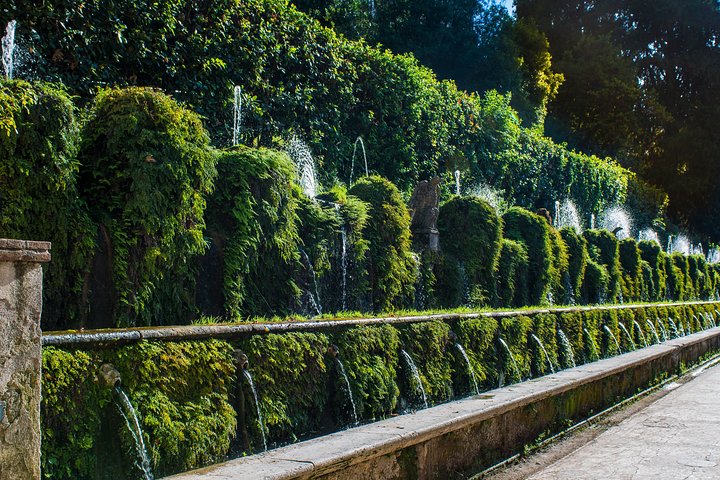
Tivoli Full Day Trip from Rome: Hadrian's Villa and Villa D'Este
★★★★★ 4.5/5 on Viator
Full-day coach tour from Rome to Tivoli covering Hadrian's Villa and Villa d'Este, rated 4.5/5 on Viator with prices from US$100.15 per person. Operates from Rome (destId 511) and includes both UNESCO sites in one trip.
Check Availability →Ancient Ostia Antica Semi-Private Day Trip from Rome by Train with Guide
★★★★★ 4.8/5 on Viator
Semi-private guided day trip from Rome to the ancient port city of Ostia Antica, travelling by regional train with a licensed guide. Rated 4.8/5 on Viator with prices from US$57.73 per person.
Check Availability →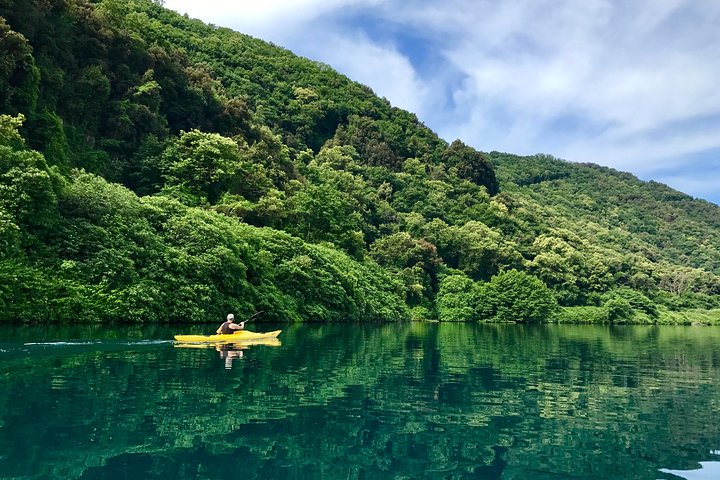
Best of Amalfi Coast Castel Gandolfo Lake Kayak and Swim Tour Pompeii: Exclusive Private Day Experience
★★★★★ 4.9/5 on Viator
Guided kayak and swim tour on Lake Albano at Castel Gandolfo, south-east of Rome. Rated 4.9/5 on Viator with prices from US$49.48 per person.
Check Availability →Frequently Asked Questions
How do you get to Ostia Antica from Rome?
Take Metro Line B to Piramide (also called Porta San Paolo). Walk to the Roma Porta San Paolo station on the Roma-Lido line, follow signs for Lido, and ride five stops to Ostia Antica. The journey takes 25-30 minutes according to Trenitalia's regional timetable, and a €1.50 BIT metro ticket covers it.
Is Ostia Antica worth visiting on its own?
Yes. The site draws around 150,000 visitors a year versus the millions who queue at the better-known ruins further south, and the 30-minute train from Porta San Paolo means you can pair Ostia with an afternoon at Castel Gandolfo's Lake Albano or a morning at Tivoli if you have a longer Rome stay. The honest verdict: Ostia is a better half-day ruin for time-poor Rome-based travelers than almost any other option within 90 minutes of the city.
What days is Ostia Antica closed?
Ostia Antica is closed on Mondays. According to Turismo Roma, the site is open Tuesday-Sunday from 8:30 AM until one hour before sunset. Last admission is one hour before closing.
How much does Ostia Antica cost?
Entry to the archaeological park is a standard ticket in the mid-teens of euros. Verify current pricing on the official site before you travel — prices can change with the calendar year. The train from Rome costs €1.50 on a standard BIT ticket.
Can you do Ostia Antica in a morning?
Yes, and that is the point. Take the 8:00-ish train from Porta San Paolo, arrive at opening (8:30 AM), spend three hours on site, eat your sandwich in the shade of the theatre, and be back in central Rome by 1 PM. Half a day, full experienc.
Is Ostia Antica worth visiting in winter?
Yes — the smaller crowds and cooler weather are an asset. The site is largely unshaded, so midsummer heat is a real constraint. Last admission moves earlier in winter (around 4 PM), so plan your arrival before noon.