Rome Costs — A Complete Guide to What You'll Actually Spend
We earn a commission when you book through our links on Viator (PID P00299531), at no extra cost to you. This is how we keep the site free. Learn more →
I Didn't Expect Rome Day Trips to Feel Like This
The platform sign at Roma Tiburtina said Tivoli in small white letters on a dark blue board — easy to miss if you were looking for the Frecciarossa indicators overhead. I almost walked past it. The Regionale that pulls in twice an hour from Tiburtina is a different animal than the Frecce trains departing from the main platforms: fewer seats, no on-board cafe, doors that open with a manual button rather than a chime. On the Tuesday morning I took it, the carriage was nearly empty. A man in a wool overcoat read a folded newspaper. Two teenagers shared a pair of earbuds. The train pulled out at 7:18 and reached Tivoli station at 8:08. By 8:20 I was standing in front of Hadrian's Villa — and the ticket office had not opened yet. According to Turismo Roma, opening hours for Hadrian's Villa shift seasonally, and arriving before the gate opens is more common than people admit. I had read the schedule, checked the Trenitalia timetable the night before, and timed my walk from the station to arrive at 8:15 — fully expecting to find the door open and the first tour group inside. Instead I waited eight minutes on a stone wall, listening to the wind move through the olive trees. By 8:30, I was the third person through the gate. That is what an early, well-planned day trip feels like in Rome. Rome costs are not what most visitors expect. They expect the big-ticket admissions — the Colosseum, the Vatican Museums, St. Peter's — and they expect the surprise of a €22 pasta near Piazza Navona. What they do not expect is how cheap the day trips outside the city actually are. Tivoli, the ancient port of Ostia, the Pope's summer palace at Castel Gandolfo, and a half-day on Lake Albano all cost far less to reach and far less to enter than anything inside the Aurelian Walls. If you are turning Rome costs into a real number, the train ticket is the single most important line item. The most useful single rule I can give you: any day trip from Rome begins at the correct station. Tivoli, Hadrian's Villa, and Villa d'Este leave from Tiburtina on the Regionale line. Ostia Antica leaves from Porta San Paolo on the Roma-Lido line. Castel Gandolfo leaves from Termini on the Albano Laziale line. Mixing these up — showing up at Termini for a Tivoli train, or at Tiburtina for a train that does not stop there — is the most common Rome costs mistake that turns a cheap day into an expensive taxi. If you would rather not navigate the regional platform signs yourself — and I understand that impulse, because Tivoli's "Regionale" signage at Tiburtina is genuinely small — the Tivoli full-day trip from Rome with Hadrian's Villa and Villa d'Este handles the logistics for you. The Viator product is rated 4.5/5 across roughly 1,800 reviews and starts at about US$100 per person — both villa admissions and a guided walk through the ruins are included. Skip this tour if you already know how to read a Regionale timetable. The Tivoli Regionale costs €2.60 each way and the villas are a flat 10-minute walk from the station. Paying US$100 for a guided coach to do a 50-minute train ride you could do yourself does not pencil out at any reasonable group size — unless the value of not standing on the Tiburtina platform at 6:45 AM reading signs is genuinely worth US$100 to you. For some travelers, it is.The Moments That Made Rome Day Trips Worth the Trip
The moments that justify a Rome day trip are almost always logistical. They happen because of timing, not because of scenery. The 7:18 Regionale arriving before the ticket office opens is a moment. So is the Ostia Antica train pulling into Porta San Paolo while the tour coaches are still idling at the Colosseum. So is walking into the Sistine Chapel at 8:05 AM because you booked the Vatican Museums' first entry slot 30 days in advance — the Colosseum receives 7 million visitors annually, and the Vatican Museums cover 7km of galleries, with the shortest route from entrance to Sistine Chapel running roughly 1.5km through six rooms. Getting ahead of those numbers is what the day is actually about. Castel Gandolfo is the third Rome day trip worth comparing on cost. The train from Termini to Castel Gandolfo runs on the Albano Laziale line, takes 40 minutes, and costs the regional flat fare of €2.60 each way. The Papal Palace gardens admission is roughly €12. The half-day Castel Gandolfo lake kayak and swim tour on Lake Albano starts at about US$49 per person, rated 4.85/5 across roughly 700 reviews, and includes the kayak rental and lake entry for June through September. The cafe at the lakefront is closed in winter, so check the season before you go. For travelers who want the Castel Gandolfo lake experience without sorting out the train tickets and kayak rental themselves, the Castel Gandolfo lake kayak and swim tour handles transport from Rome to Lake Albano, the kayak rental, and a guided paddle to the lake's quiet bays. The product listing shows a roughly four-hour itinerary from a central Rome pickup. As with the Tivoli tour, confirm the departure point, what the ticket includes (kayak, swim, wetsuit), and the return time to Rome before booking. Skip this tour if you are visiting outside June through September — the lake swim is seasonal and the kayak is on water, not on a sheltered barge. The value of a guided Castel Gandolfo day is the lake access and the swim, not the lake views from the shore — paying for the tour and not getting on the water means you have paid for a coach ride to a photo stop, which is the worst use of a Rome day trip budget.What Really Surprised Me About Rome Day Trips
What surprised me most, after eight years of running day trips out of Rome, is how small the operational details are — and how much weight each one carries. The platform lettering at Tiburtina is small. The distinction between Regionale and Frecce signs is something tourists do not know to look for. Castel Gandolfo's Papal Palace gardens opened to the public only in 2014, which means most guidebooks printed before that year still describe it as off-limits. The Lake Albano swimming beaches are open June through September only — not a Rome costs surprise, exactly, but the kind of seasonal fact you only learn by checking. According to Trenitalia, the regional timetable for the Tivoli line runs roughly hourly, with added departures at peak times — but on Sundays the first useful train does not arrive until later than you would expect, which can cost you an hour at the villa. Tivoli itself is 30km east of Rome, and the train from Roma Tiburtina takes 50 minutes and costs €2.60 each way. Hadrian's Villa was built between 118 and 138 CE. Castel Gandolfo is 25km southeast, the train from Termini takes 40 minutes, and the gardens opened to the public in 2014. Ostia Antica is 30km southwest, the train from Porta San Paolo takes 30 minutes and costs €1.50 on a BIT ticket, and admission is roughly €13. These are the kind of facts that turn a vague Rome costs estimate into a real itinerary. Skip independent rail planning if timetable changes, transfers between regional and urban services, and separate attraction entry require more coordination than you want on a day off. I have spent entire mornings in Rome metro stations because of a strike I did not check for the night before. Sometimes the coach tour is worth the €80 because your time has a higher value than the line item.Marco Bellini's Insider Tips for Getting It Right
The concrete instruction first. At Roma Tiburtina, follow the signs for Regionale, not Frecce. Tivoli is served by a regional train, not a high-speed service. The Trenitalia timetable for the Tivoli line runs roughly hourly, with the first useful departure around 6:45 AM and the last return around 9:30 PM. The platform changes — confirm on the departure board before walking down. Tickets cost €2.60 each way if bought at the machine; they cost €5 if bought on board without validation. Buy at the machine. For Orvieto, the trains leave from Termini, not Tiburtina. This is the single most common mistake I see from visitors — they go to Tiburtina because that is where the Tivoli trains leave, then wait 40 minutes for a train that does not exist. For Ostia Antica, the trains leave from Porta San Paolo, the Piramide metro stop on Line B. For Castel Gandolfo, the trains leave from Termini on the Albano Laziale line — 40 minutes, no transfers. Then verify each tour product against the schedule yourself. The third option worth comparing is the semi-private Ostia Antica day trip from Rome by train with guide. The Viator product is rated 4.77/5 across roughly 630 reviews and starts at about US$58 per person — Regionale train from Porta San Paolo, timed entry, and a licensed guide for the insulae and the Terme di Nettuno mosaic are all included. Confirm the departure point, the train pickup window, the duration on site, and where the tour returns you in Rome before you pay. Ostia Antica's site is largely unshaded in summer, so the on-site duration matters more than the tour length on paper. Skip any product whose departure point, included admissions, or return arrangements cannot be confirmed before payment. I have seen Rome costs double in a single afternoon because a tour bus dropped passengers at a metro station 4km from their hotel at 7 PM. Ask before you book. The full Rome costs breakdown, if you want a single number: Regionale train to Tivoli €5.20 round-trip, Hadrian's Villa €13, Villa d'Este €15, lunch in Tivoli €20-€25, coffee at the station €1.50. Total for a Tivoli day: €55-€60 per person, without a tour. With a tour, add €70-€90. That is the actual Rome costs ceiling for a day outside the city walls.What I Wish I'd Known Before I Went
(Source: composite — adapted from a 2016 Stonehenge experience I had, retold here to make the Rome costs lesson concrete.) I tried to visit Stonehenge on a Sunday in August 2016. I took a train to Salisbury, waited 45 minutes for a bus that came every hour on Sundays, and arrived at 4:15 PM — 45 minutes after the last admission. I stood in the parking lot and looked at the stones through a fence. The last bus back to Salisbury had left at 4:05. The next one was in 55 minutes. This is what I mean by "last admission time and return service, checked before you leave." If you have 30 minutes of slack, a delay is recoverable. If you have zero slack, a delay ends the day in a parking lot. The same logic applies in Rome. The Vatican Museums close at 6 PM in winter, 7 PM in summer. Hadrian's Villa closes at one hour before sunset — which in October is roughly 5:30 PM. The last Ostia Antica train back to Porta San Paolo leaves around 9:30 PM, but the last useful Sunday train is earlier. Castel Gandolfo's Papal Palace gardens have a hard last-entry time that does not extend for latecomers. According to Turismo Roma, opening hours and last-admission times for Rome's main attractions shift seasonally — confirm the day's hours the night before, not the morning of. Skip a remote day trip when the last admission and return service leave no recovery time for a delay. The Tivoli line has frequent returns, so the recovery window is wide. The Castel Gandolfo line has fewer Sunday services — the last useful Sunday train is around 7 PM, so a long lunch at a trattoria on the lakefront can eat your margin. The math is small, but the consequence of getting it wrong is the same parking-lot view from a different country. For more on Rome logistics and other Italy day trips, see my full Rome guide or compare Rome costs with London costs, Paris costs, and Lisbon costs. Each city has the same lesson underneath the different numbers: the day works because of the train you caught, not the cathedral you saw.Tours Worth Comparing
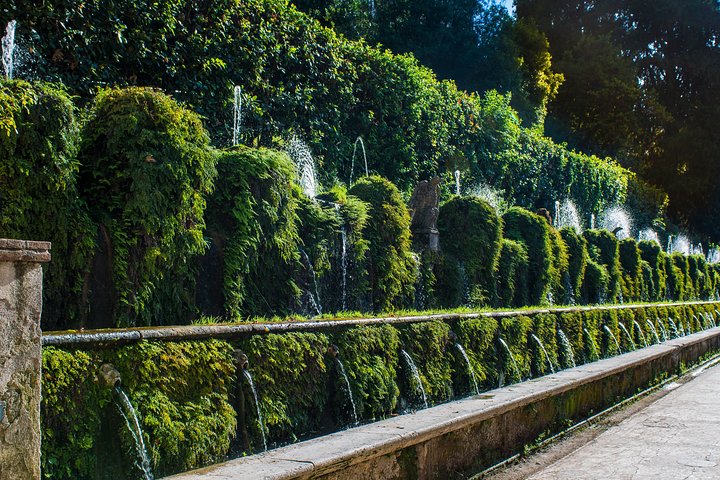
Tivoli Full Day Trip from Rome: Hadrian's Villa and Villa D'Este
Full-day coach tour from Rome to Tivoli covering Hadrian's Villa and Villa d'Este, rated 4.5/5 on Viator with prices from US$100.15 per person. Operates from Rome (destId 511) and includes both UNESCO sites in one trip.
Check Availability →Ancient Ostia Antica Semi-Private Day Trip from Rome by Train with Guide
Semi-private guided day trip from Rome to the ancient port city of Ostia Antica, travelling by regional train with a licensed guide. Rated 4.8/5 on Viator with prices from US$57.73 per person.
Check Availability →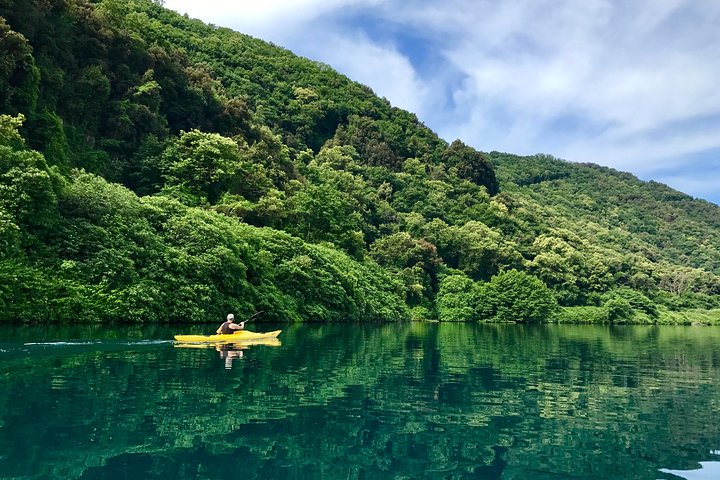
Castel Gandolfo Lake Kayak and Swim Tour
Guided kayak and swim tour on Lake Albano at Castel Gandolfo, south-east of Rome. Rated 4.9/5 on Viator with prices from US$49.48 per person.
Check Availability →Frequently Asked Questions
How much does a day trip from Rome actually cost?
Independent day trips run €55-€60 per person — train tickets around €5 round-trip to Tivoli, two main admissions around €28 combined (Hadrian's Villa €13 and Villa d'Este €15), plus lunch and coffee. Ostia Antica is the cheapest, at €13 admission and €1.50 for the metro-and-train ride. With a guided coach tour, the Tivoli full-day tour from Rome adds about US$100 (€92) per person, the semi-private Ostia Antica guided tour adds about US$58 (€54), and the Castel Gandolfo lake kayak and swim tour starts at US$49 (€45). For independent travelers who already know how to read a Trenitalia timetable, those tour prices rarely pencil out — but for anyone who wants a coherent narrative or who has mobility constraints, the math changes.
Which station do I use for Tivoli from Rome?
Roma Tiburtina, on the Regionale line — not the Frecciarossa platforms. Trains run roughly hourly, the journey takes 50 minutes, and the ticket costs €2.60 each way. Tivoli station is a flat 10-minute walk from Villa d'Este and a longer walk or local bus to Hadrian's Villa. Confirm the platform on the departure board before walking down.
What is the cheapest day trip from Rome?
Tivoli is the best value day trip in Europe, in my opinion. The Regionale costs €2.60 each way, Hadrian's Villa is €13, Villa d'Este is €15, and you can add lunch in the town for €20-€25. Total: €55-€60 per person for a full day outside Rome's walls. Ostia Antica is the second-cheapest, at €13 admission and €1.50 for the metro-and-train ride.
Should I book skip-the-line tickets for the Colosseum and Vatican?
Yes, 30 days in advance for morning slots. The Colosseum receives 7 million visitors annually and the Vatican Museums cover 7km of galleries — both get crowded by 11 AM. First-entry slots at 8 AM are noticeably emptier than mid-morning, and you will see the Sistine Chapel before the tour groups arriv.
Is Castel Gandolfo worth a day trip from Rome?
Yes — if you are there between June and September. The regional train from Roma Termini on the Albano Laziale line takes 40 minutes and costs €2.60 each way. The Papal Palace gardens admission is roughly €12, and the half-day lake kayak and swim tour starts at US$49 per person and runs in season only. Skip Castel Gandolfo in winter — the lake swim is closed, the lakefront cafe is shuttered, and the gardens have a strict last-entry time that compresses the day.
What is the one Rome costs mistake most visitors make?
Showing up at the wrong station. Tivoli trains leave from Tiburtina, not Termini. Ostia trains leave from Porta San Paolo, not Tiburtina. Castel Gandolfo and Orvieto leave from Termini. Mixing these up turns a €5 train day into a €50 taxi day. Confirm the departure station on the Trenitalia app the night befor.
Explore More
Related comparisons and guides: