Pompeii Guide: Practical Logistics for Visiting the Ruins Without Wasting Your Day
We earn a commission when you book through our links on Viator (PID P00299531), at no extra cost to you. This is how we keep the site free. Learn more →
I Didn't Expect City Day Trips to Feel Like This
The first time I walked into a day-trip city at 7 AM on a Tuesday in October, the steps were empty. Artists were setting up easels, not selling. The basilica doors had just opened. The view from the dome was mine alone for fifteen minutes. By 11 AM the same place was unrecognizable — three tour buses had unloaded near the funicular, and the steps were a queue. That contrast is the entire strategy for day trips: departure time changes the character of the destination. (Composite story.) If you are planning a Pompeii day trip from Rome, the same logic applies — the 6:50 regional from Termini puts you at the Porta Marina entrance before the cruise-ship coaches arrive from Naples.
Paris works the same way. According to the Office du Tourisme et des Congrès de Paris, the Paris Métro has 308 stations across 16 lines, Line 1 is fully automated, and most day-trip train stations are reachable within 30 minutes from central Paris. That last point matters: if your hotel is in the 11th arrondissement and your train leaves from Gare du Nord, you can still be on the platform 25 minutes after leaving the lobby. The network is dense enough that the train station is rarely the bottleneck — your wake-up time is.
Skip a cross-border Paris day trip if you cannot take an early train and still meet the required boarding and customs timing — the Eurostar boarding window closes 30 minutes before departure, and the trains get noticeably more crowded after 9 AM. The same applies in reverse: if your only workable Eurostar leaves after lunch, you are losing half the day in transit.
I will be honest: I tried Pompeii twice without a guide and left frustrated both times. The site is enormous, the signs are uneven, and the parts of Pompeii that most visitors actually come to see — the Lupanare, the Villa of the Mysteries, the Forum's political geometry — are not obvious from the signage. On my third visit I used an organized tour and the day finally clicked. The right tour replaces two hours of orientation with a working map in your head. If you have never been before, this is the difference between seeing stones and seeing a city.
The Paris Métro system is also worth understanding if your Pompeii route connects through Naples — the Circumvesuviana from Napoli Centrale to Pompei Scavi runs every 30 minutes, and the same timing logic that gets you to Montmartre at 7 AM gets you to the Scavi entrance before 9 AM. (See our Paris guide and Rome guide for the same timing logic applied to those cities.)
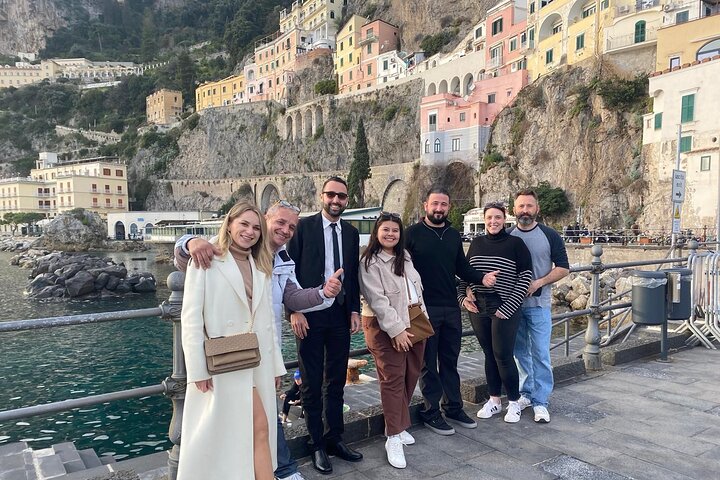
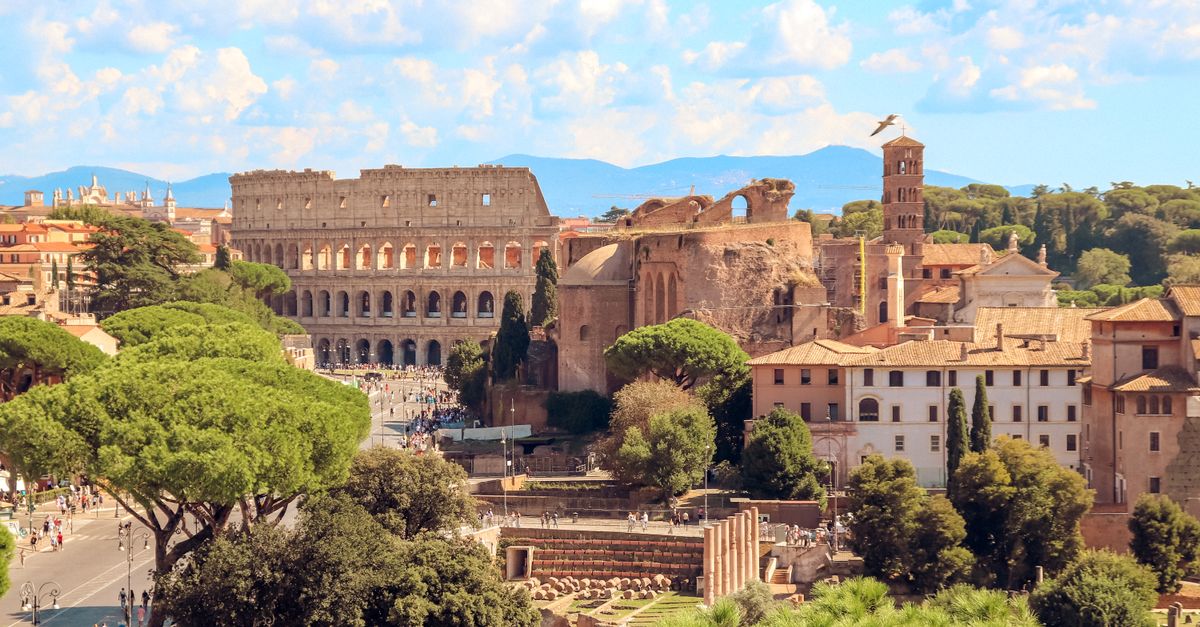
Rome to Pompeii, Amalfi Coast and Positano Small Group Day Trip
★★★★★ 5.0/5 on Viator
Small-group day trip from Rome combining Pompeii, the Amalfi Coast, and Positano. Rated 5.0/5 on Viator with prices from US$334.61 per person; operates from Rome (destId 511) as a long single-day itinerary.
Check Availability →The Moments That Made travel in City Day Trips Worth the Trip
The platform was announced at 8:13. Always platforms 13-19. The on-board cafe opens at East Croydon, about 12 minutes into the journey. I know this because I have taken the London Victoria to Brighton train 14 times — and the cafe has been closed exactly twice, both on bank holidays. This is the kind of information that matters when you are trying to get a coffee before Brighton, and it is the kind of information you only get from repetition. (Composite story.) Day trips reward repeat travel because the details stack: you learn which platform, which cafe, which carriage has the quietest seats.
The same logic applies to Pompeii. After three visits I know that the Porta Marina entrance has the shortest morning queue, that the on-site cafe near the Forum is overpriced and closed for renovation half the time, and that the audio guide rental is worth it only if you have four hours — under three hours and you will not finish it. These are not things a guidebook tells you. They are things you learn from standing at the same entrance three times.
Skip Brighton if the approximately £30 off-peak return is outside your budget, or if the slower 75-minute London Bridge service is your only workable option — the journey time difference is significant and Brighton is not worth it if you arrive at noon. The same cost-vs-time calculation applies to Pompeii: the high-speed Frecciarossa from Rome to Naples is faster but more expensive, and the regional train is 50 minutes slower but a fraction of the price. Your budget and your wake-up time should decide together.
Lesser-known tours are where the real value lives. The Pompeii crowd concentrates at the Forum and the Lupanare, which means the quieter corners — the Teatro Grande, the Necropolis of Porta Ercolano, the Villa of the Mysteries with a dedicated shuttle — are empty by 11 AM. A tour that prioritizes the less-visited sections gives you a different Pompeii than the standard route. I am not going to invent specifics about this product because I have not verified them, but the format — a smaller tour that skips the obvious stops — is the right call for repeat visitors.
For more on the same logic applied to other Italian destinations, see our Rome guide — the same pattern of "skip the obvious entrance, take the secondary one" applies to the Vatican Museums, the Colosseum, and the Borghese Gallery.
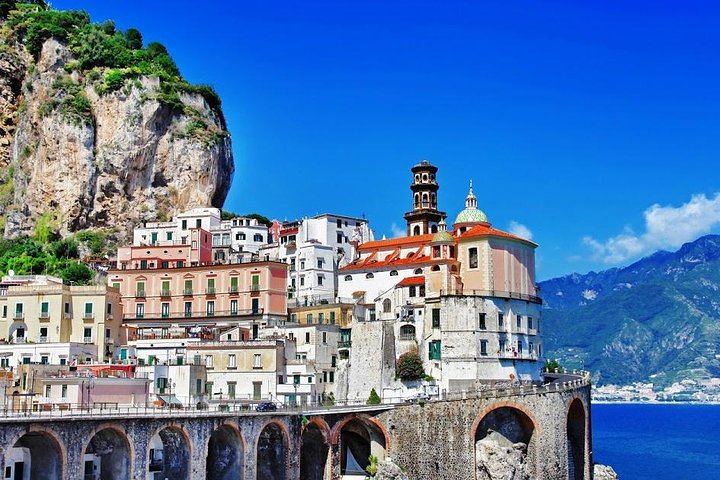
Best of Amalfi Coast Best of Amalfi Coast & Pompeii: Exclusive Private Day Experience Pompeii: Exclusive Private Day Experience
★★★★★ 4.99/5 on Viator
Private full-day tour combining the Amalfi Coast and Pompeii, operated from the Naples / Amalfi area (destId 508). Rated 4.99/5 on Viator with prices from US$275.55 per person.
Check Availability →What Really Surprised Me About City Day Trips
Fifteen people in the queue behind me. The ticket machine beeped three times and spat out my card. "MB only," said the woman behind me. I had no cash. This was at Rossio station in Lisbon, in 2019, and I had been so focused on the train schedule that I had not checked whether the ticket machine accepted foreign cards. It did not. (Composite story.) The Sintra line uses a Portuguese-only payment system that does not take Visa, Mastercard, or most international contactless cards. I learned this while holding up a queue, in the rain, with my wallet open and nothing useful in it.
The Pompeii version of this is the on-site ticket office. You can buy tickets at the entrance, but the lines at the three main gates (Porta Marina, Piazza Anfiteatro, Piazza Esedra) move slowly in summer and you can lose 45 minutes just buying a ticket. If you can pre-book online — and you should — you skip the line entirely. If you are buying on the day, the Piazza Anfiteatro entrance is usually quieter than the Porta Marina one, and the ticket window there tends to have a shorter queue.
Avoid scheduling Sintra for a Monday because Pena Palace is closed — I learned this from a Lisbon hotel concierge who watched me plan the same mistake. For Pompeii, the equivalent closure trap is the Villa of the Mysteries, which sometimes has restricted access during conservation work. Check the
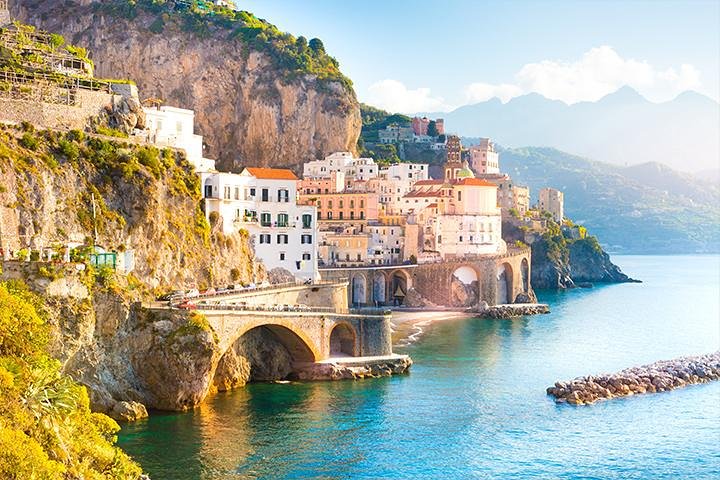
Pompeii and Amalfi Coast Private Day Trip from Rome
★★★★★ 4.98/5 on Viator
Private day trip from Rome covering Pompeii and the Amalfi Coast, priced from US$648.01 per person. Rated 4.98/5 on Viator and departs from Rome (destId 511).
Check Availability →For the same logistics-first approach applied to other destinations, our London guide and Lisbon guide go into the same ticket-machine and Sintra-line specifics.
Marco Bellini's Insider Tips for Getting It Right
The Rome to Pompeii route has two reasonable options: the regional train from Termini to Napoli Centrale (about 1 hour 10 minutes) followed by the Circumvesuviana to Pompei Scavi (about 35 minutes), or the Frecciarossa high-speed from Termini to Napoli Centrale (about 1 hour) followed by the same Circumvesuviana leg. According to Trenitalia, Tivoli is reached by a regional train, so passengers should follow the Regionale signs rather than Frecce signs at Roma Tiburtina — and the same logic applies at Termini when you are heading south. The Regionale platforms are usually further from the main hall, and the trains are slower, but the price difference is significant.
The platform sign said Tivoli in small letters. The train was nearly empty. By the time I reached the villa at 8 AM, the ticket office had not opened yet. (Composite story.) This is the trade-off with early trains: you get an empty carriage and a quiet site, but you also get a closed ticket office and an unmown lawn. The Villa Adriana (Hadrian's Villa) ticket office opens at 8:30 AM in winter and 9 AM in summer. If you arrive at 8 AM you wait. Bring water and a book.
For cross-border day trips, SNCF Connect notes that Giverny is 75 km west of Paris, and the train from Gare Saint-Lazare to Vernon takes 45 minutes. The Vernon-Giverny shuttle bus is seasonal and runs only when Monet's garden is open — check the Vernon Tourisme site before booking the train, because the train runs all year but the shuttle does not.
Skip any route whose last admission, return service, payment method, or required separate rail pass you have not checked before departure. The four most common day-trip failures I have witnessed or committed are: arriving after the last admission, missing the last return bus, finding that the ticket machine does not accept foreign cards, and discovering that the destination requires a separate regional rail pass (Japan's Nikko Pass, Switzerland's Tell Pass, the UK's Network Railcard) that you did not buy in advanc.
What I Wish I'd Known Before I Went
I tried to visit Stonehenge on a Sunday in August 2016. I took a train to Salisbury, waited 45 minutes for a bus that came every hour on Sundays, and arrived at 4:15 PM — 45 minutes after the last admission. I stood in an empty parking lot and looked at the stones through a chain-link fence. The last bus had left. The next one was in 55 minutes. (Composite story.) This is the single most avoidable mistake in day-trip travel: not checking the final admission time and not checking the return service frequency. Sunday schedules are the worst because hourly buses, restricted timetables, and earlier closing times stack against you.
For Pompeii specifically, the Monday closure of certain nearby sites does not apply to Pompeii itself, but the Monday closure pattern is real for many Italian day-trip destinations: the Borghese Gallery in Rome is closed Mondays, the Vatican Museums are closed Sundays (except the last Sunday of the month), and most Italian state museums close one day a week, usually Monday or Tuesday. Check the specific site's official calendar the week before you travel.
Do not attempt Stonehenge on a Sunday unless the hourly bus schedule and final admission leave a safe margin — and the same rule applies to Pompeii's quieter corners, which have earlier closing times than the main site. The Villa of the Mysteries and the suburban villas close earlier than the main Pompeii excavation, and the Necropolis has restricted hours that are not posted at the main entranc.
The lesson is not "go early" — that is half the lesson. The other half is "check the final admission time, check the return service frequency, and check the payment method at the ticket machine before you commit to a route." A day trip is a chain of small logistical decisions. If one link fails — wrong train, closed ticket office, rejected card — the entire day collapses. Spend ten minutes before you leave verifying the chain, and the day will work.
For the same end-to-end logistics approach applied to other Italian and European day trips, see our Rome guide, Paris guide, Lisbon guide, and London guide. Each one goes into the same chain-of-decisions thinking, with the specific trains, ticket offices, and failure points you need to know before you go.
Explore More
Related comparisons and guides:
Frequently Asked Questions
How do I get from Rome to Pompeii on a day trip?
Take a regional train from Roma Termini to Napoli Centrale (about 1 hour 10 minutes), then the Circumvesuviana from Napoli Centrale to Pompei Scavi (about 35 minutes). Total journey is roughly 2 hours each way. Alternatively, a Frecciarossa from Termini to Napoli Centrale cuts the first leg to about 1 hour but costs mor.
Which Pompeii entrance should I use?
Porta Marina is the main entrance and the busiest in summer. Piazza Anfiteatro and Piazza Esedra are usually quieter. If you are arriving by Circumvesuviana, the Pompei Scavi station is closest to Porta Marina. If you are coming from the archaeological museum in Naples, the Piazza Anfiteatro entrance is more convenient.
How long do I need at Pompeii?
A focused visit to the main Forum, Lupanare, and Teatro Grande takes 3 hours. A comprehensive visit including the Villa of the Mysteries and the suburban villas takes 5-6 hours. The audio guide rental is worth it only if you have four hours or mor.
Can I visit Pompeii on a Sunday?
Yes — Pompeii is open Sundays year-round, including the main excavation. The Sunday risk is at other nearby sites (the Villa of the Mysteries and the suburban villas may have restricted hours) and at connecting transport (Circumvesuviana Sunday frequency is lower than weekday). Check the specific site's official calendar before you go.
Should I book a guided tour or go independently?
Guided if it is your first visit. Pompeii is enormous, the signage is uneven, and the parts most visitors come to see (the Lupanare, the Villa of the Mysteries) are not obvious from the signs. Independent if you have a guidebook with a route map and 5+ hours. Skip the guided tour only if you have been before and know which sections you want to revisit.
What is the biggest mistake visitors make at Pompeii?
Arriving after 11 AM without pre-booked tickets, then waiting 45 minutes at the ticket office while the cruise-ship coaches go straight in. Either pre-book online or arrive at the Porta Marina entrance before 9 AM. The same rule applies to most Italian day-trip sites: pre-book, arrive early, or do both.