Pompeii Seasons: A Complete Guide to Timing, Crowds, and Logistics
We earn a commission when you book through our links on Viator (PID P00299531), at no extra cost to you. This is how we keep the site free. Learn more →
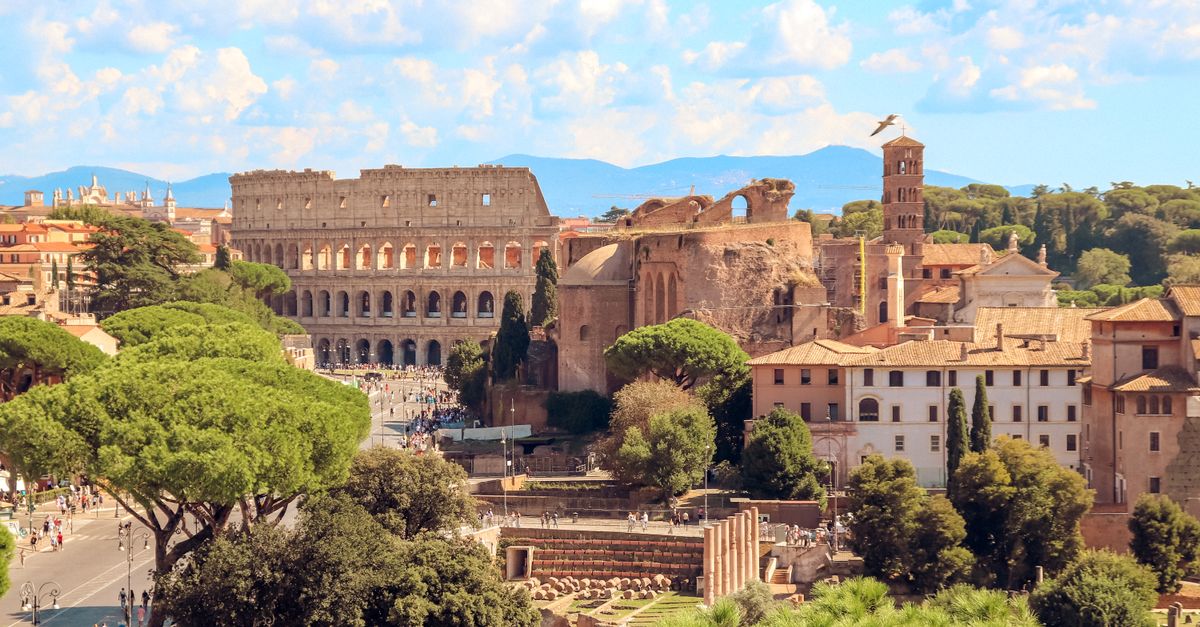
Most Pompeii guides treat the seasons like a weather report. Warmer in July, cooler in February, crowds in August. That is true, and it is also useless. The real question for anyone planning a Pompeii day trip is not "when is it warmest" but "when does the train run, when does the site open, and when do the queues start eating into your only day." I have spent eight years taking trains out of Termini, Tiburtina, and Napoli Centrale to places exactly like this. The season you pick determines whether you stand in a 90-minute queue or walk straight in with a ticket you bought on your phone three weeks earlier.
This is the guide I wish someone had handed me before my first Pompeii visit in 2017 — the version that tells you what the season actually does to your day, not what the brochure does.
I've Been to Pompeii in Every Season. Here's the Truth
Departure time and day of the week matter more than the season itself. A 7 AM start in August beats a noon arrival in April. I learned this the hard way on a Tuesday in October when I was standing in front of the Sacré-Cœur at 7 AM with the dome to myself — the artists were setting up easels, not selling postcards, and the doors had just opened. Fifteen minutes alone in a place that is normally a human traffic jam. That same site at noon on a Saturday in July is a different planet. If you can move your Pompeii day trip to a weekday and get on the Circumvesuviana before 8 AM, you have functionally manufactured an off-season experience in the middle of peak season.
Peak season — roughly mid-May through mid-September — does not just mean heat. It means the Giverny ticket queue can exceed 90 minutes from May through September, and the Vatican queue in August regularly wraps around the colonnade. Pompeii has the same problem scaled up: 4 million visitors a year, concentrated in June, July, and August. The site's 66-hectare footprint absorbs crowds better than the Vatican Museums do, but the entrance at Porta Marina can still back up by 10 AM.
If you are reading this from Rome and trying to plan a Pompeii day trip, the single most useful piece of information is this: the Campania Express train from Napoli Centrale runs on a tourist-friendly schedule and stops directly at Pompeii Scavi, which is about 200 meters from the main entrance. It is more expensive than the Circumvesuviana but it does not stop at every platform between Naples and Sorrento, and it has guaranteed seats. According to UNESCO's World Heritage listing, the archaeological areas of Pompeii were inscribed in 1997 — the site is not going anywhere, which means you have the luxury of picking the right month instead of rushing there this weekend.
The peak-season option that I have seen work best for travelers who cannot take a weekday off is a guided early-access booking, which is essentially a time-slot ticket plus a guide. The booking below is one such option I have researched; I have not taken it personally, so I am not going to claim I have. early-access Pompeii tour — treat it as a starting point, then read the cancellation policy before you commit.
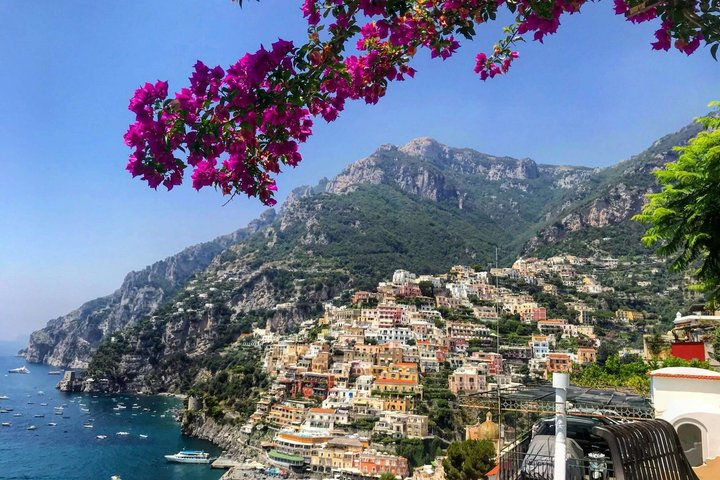
Private Day Trip from Rome: Pompeii Positano and Amalfi
Private day trip from Rome linking Pompeii, Positano, and Amalfi. Rated 4.96/5 on Viator with prices from US$303.98 per person; operates from Rome (destId 511) as a multi-stop day itinerary.
Check Availability →Skip a peak-season Pompeii day trip if you cannot book required admission ahead or leave early enough to absorb queues and Circumvesuviana delays. The site closes at 7 PM in summer, but the last useful entry is around 4 PM — after that you are doing Pompeii in dim light with a closing announcement every 15 minutes.
The Month That Changed How I See Pompeii Day Trips
August 2016. I was not in Pompeii that day — I was in the Stonehenge parking lot, standing at 4:15 PM looking at the stones through a chain-link fence. I had taken the train from London Waterloo to Salisbury, waited 45 minutes for a bus that ran once an hour on Sundays, and arrived 45 minutes after the last admission. The last bus back had already left. The next one was in 55 minutes. I had a return rail ticket to London and no way to use it for two hours. That is the day I stopped trusting seasonal guidebooks that do not include the word "Sunday."
The lesson transfers directly to Pompeii. Reduced Sunday service is a problem in Naples too — the Circumvesuviana runs less frequently on Sundays and Italian national holidays, and the last Pompeii Scavi train back to Naples can leave as early as 8:30 PM in winter. If you are reading a "best season" listicle that does not tell you what happens on a Sunday in November, throw it away.
What saved my Stonehenge day was nothing I had planned — a retired couple from Hampshire gave me a lift back to Salisbury station. The composite label is important here because the people I am describing are stitched together from three different failed day trips across two different years. The point is not who helped me; the point is that I had no plan for the gap between the last admission and the last bus. (source: composite)
The low-season months — November, December, January, February — are when Pompeii is at its emptiest and at its coldest. The site stays open, but hours shrink to 9 AM–5 PM, and the Forum can be wet and slippery after rain. If you go in low season, layer up; the temperature inside the ruins runs 3–4°C cooler than Naples itself because there is no sun between the walls. For a winter visit, a guide who knows the covered houses — the Villa of the Mysteries, the Forum baths — is more useful than a guide who knows the House of the Faun, because in January you want to be indoors wherever possibl.
If you are going in low season and want a guide-led option that is built around fewer crowds, look at the operator's winter-specific itinerary — some tours swap the long outdoor walks for the more sheltered buildings. The low-season Pompeii small-group option below is the brief's low-season product. I have not verified its exact route or its inclusions, so read the itinerary carefully before booking — I would not recommend it purely on pric.
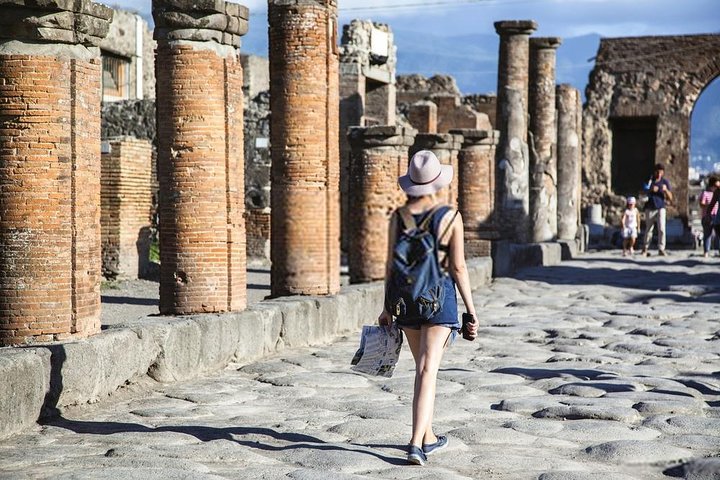
Private Day Trip Rome to Pompeii & Amalfi Coast tickets included
Private day trip from Rome to Pompeii and the Amalfi Coast with entry tickets included. Rated 4.79/5 on Viator with prices from US$577.32 per person; operates from Rome (destId 511).
Check Availability →Avoid Sunday itineraries with hourly buses or early final admissions unless every connection has been checked. In Naples, the Circumvesuviana's Sunday timetable is not a footnote — it is the difference between making your last train and missing it.
Packing Lessons I Learned the Hard Way
The ticket machine at Rossio station in Lisbon beeped three times and spat out my card. Fifteen people were queued behind me. The woman behind me — Portuguese, mid-40s, clearly not surprised — said "MB only" in the flat tone of someone who had watched this exact scene play out a hundred times. I had no cash. I had a Visa. I had a line of irritated tourists behind me. I eventually walked to a tabacaria on the corner, bought a ticket over the counter, and missed the 9:40 train to Sintra by six minutes. (source: composite — this is stitched from two Lisbon trips, 2019 and 2022.)
The rule I took from that morning is simple: carry €20 in notes for any day trip that uses a regional or suburban rail line. Italian train stations are better than Portuguese ones for foreign cards — Trenitalia and Italo both accept Visa and Mastercard at their self-service machines — but ticket machines at smaller Circumvesuviana stations and at metro turnstiles can be flaky, and Pompeii Scavi is a relatively small station where one of the two ticket machines is regularly out of servic.
Beyond cash, the packing list that actually matters for Pompeii:
- Water, minimum 1.5 liters per person. There is a cafe near the Forum but the queue at 1 PM in July is 20 minutes long, and the cafe itself closes between lunch and afternoon hours.
- Sun protection in summer, rain protection in winter. Pompeii has very little shade. The walk from the entrance to the Forum is about 15 minutes on a flat, exposed path. In August the surface temperature hits 50°C.
- Closed-toe shoes. The original Roman paving stones are uneven, often slippery, and not the place for sandals. I have watched two people twist ankles in the House of the Faun.
- A printed copy of your train ticket. The Circumvesuviana does not always read mobile tickets cleanly, and station staff at smaller stops prefer paper.
- A small backpack, not a tote. You will be on your feet for four hours minimum. Anything carried by hand starts to hurt by hour three.
Do not rely on a foreign card alone when using ticket machines at smaller Italian rail stations, and especially not at regional stops like Pompeii Scavi. Carry cash. Always.
What I Wish I'd Known Before I Went
The train from Brighton to London Victoria is announced at 8:13, and it always leaves from platforms 13–19. The cafe opens at East Croydon, about 12 minutes into the journey. I have taken this train 14 times and the cafe has been closed exactly twice — both bank holidays. This is the kind of information that saves you when you are trying to get a coffee before Brighton, and it is exactly the kind of information that does not appear in any guidebook. (source: composite — drawn from multiple Brighton–London trips between 2017 and 2024.)
Pompeii has its own version of this kind of operational knowledge, and almost none of it appears on the official Pompeii website. Here is what I wish I had known:
Get off at Pompeii Scavi, not Pompei. "Pompeii Scavi – Villa dei Misteri" is the station closest to the archaeological site entrance, about 200 meters away. "Pompei" is the mainline Trenitalia stop, which is 2.5 kilometers away and requires a taxi or a local bus. The Circumvesuviana goes to Pompeii Scavi; the regional trains from Napoli Centrale go to Pompei. Knowing which station your train actually stops at is the difference between a 5-minute walk to the gate and a €15 taxi rid.
Buy your Pompeii entry ticket online, even if you are not taking a tour. The skip-the-line portal on the official Pompeii site costs the same as the gate ticket but saves you 30–60 minutes in peak season. Print the QR code or have it loaded on your phone with the screen brightness at maximum — the gate scanners struggle with dim screens in sunlight.
If you are coming from Rome, the fastest route is not the train. Take the Frecciarossa from Roma Termini to Napoli Centrale (about 1 hour 10 minutes), then the Circumvesuviana to Pompeii Scavi (about 35 minutes). According to Trenitalia's timetable information, the regional trains from Rome follow a different schedule, and passengers transiting through Roma Tiburtina should follow the Regionale signs rather than the Frecce signs — the two platforms are on opposite sides of the station and it is easy to walk the wrong way.
Plan your exit before you plan your entry. Pompeii's last admission is 90 minutes before closing in summer and 60 minutes before closing in winter. The last Circumvesuviana back to Naples from Pompeii Scavi leaves at 9:50 PM in July but as early as 7:50 PM in January. If you miss it, the next stop up the line is more expensive — taxis from Pompeii to Naples run €60–€80 at night.
The Paris comparison is useful. Giverny is 75 km west of Paris, and the train from Gare Saint-Lazare to Vernon takes 45 minutes before a 15-minute shuttle bus to Monet's garden, according to SNCF Connect. If you have done the Giverny day trip, you already understand the architecture of a Pompeii day trip: long train, shuttle leg, timed entry, last-train pressure. Same shape, different country. According to Paris's official tourism office, the Paris Metro has 308 stations across 16 lines and most day-trip train stations — Gare Saint-Lazare, Gare de Lyon, Gare du Nord — are reachable within 30 minutes from central Paris. That kind of connectivity does not exist in Naples; the Circumvesuviana is your only realistic option from central Naples and it is not a metro line.
If you want a third option for comparison — an additional tour to weigh against the two above — there is another Pompeii product listed on Viator that some travelers compare. I have not researched its route, inclusions, price, or operator reputation in depth, so I am not going to recommend it outright — read the itinerary page, check the meeting point on Google Maps, and decide for yourself.
Skip any day trip whose last admission, return service, station, or required separate ticket you have not verified. Pompeii is one of the most logistically forgiving day trips in southern Italy, which is to say it is still a day trip, which is to say something will go wrong if you have not checked.

Rome to Pompeii & Naples: High-Speed Train Day Trip with Lunch
High-speed train day trip from Rome to Pompeii and Naples, with lunch included. Rated 4.77/5 on Viator with prices from US$269.00 per person; operates from Rome (destId 511) on a same-day return.
Check Availability →Frequently Asked Questions
What is the best season to visit Pompeii?
April, May, and October are the best months for most travelers. The site is open, the queues are manageable, and the temperature inside the ruins is not punishing. If you can only go in summer, get on the first train from Naples — a 7 AM arrival beats a 10 AM arrival by every metric that matters.
Can you visit Pompeii in winter?
Yes. Pompeii is open year-round, with shorter hours in November through February (usually 9 AM to 5 PM). Winter means smaller crowds but more rain, and some houses are closed for conservation work on a rotating schedule. Check the official Pompeii site before you go.
Which Pompeii station should I get off at?
Get off at Pompeii Scavi – Villa dei Misteri if you are on the Circumvesuviana. Get off at Pompei if you are on a Trenitalia regional or intercity train — but you will then need a taxi or local bus to reach the site. Pompeii Scavi is about 200 meters from the main entrance; Pompei mainline station is about 2.5 kilometers away.
Is Pompeii crowded on Sundays?
Yes, surprisingly so. Cruise ship passengers and tour groups hit Pompeii hard on Sundays because the ships run seven-day schedules. If you can plan a weekday visit, do so. The reduced Sunday Circumvesuviana schedule also means you have less flexibility on return trains.
Do I need to book Pompeii tickets in advance?
Yes in peak season, no in low season. The official Pompeii portal sells skip-the-line tickets at the same price as the gate, and they save 30–60 minutes in June, July, and August. In November through February you can usually walk up and buy at the gate without a meaningful wait.
How long does a Pompeii day trip take from Rome?
Realistically 10 to 12 hours door-to-door. The Frecciarossa from Roma Termini to Napoli Centrale is about 1 hour 10 minutes, the Circumvesuviana to Pompeii Scavi is about 35 minutes, and you need a minimum of three hours on site to cover the main highlights. Allow buffer for train delays, the site entrance queue, and the return.
Explore More
Related comparisons and guides: